
What Is Cupping Therapy? Guide to Pain Relief in Cedar City
You’ve likely seen the marks. Bold, circular, dark-purple rings dotted across the backs of Olympic swimmers, CrossFit athletes, or perhaps even your coworker who always seems to have her life together.
At first glance, it looks like someone got into a fight with a giant octopus. But behind those distinctive marks lies one of the most effective, time-tested modalities in modern bodywork.
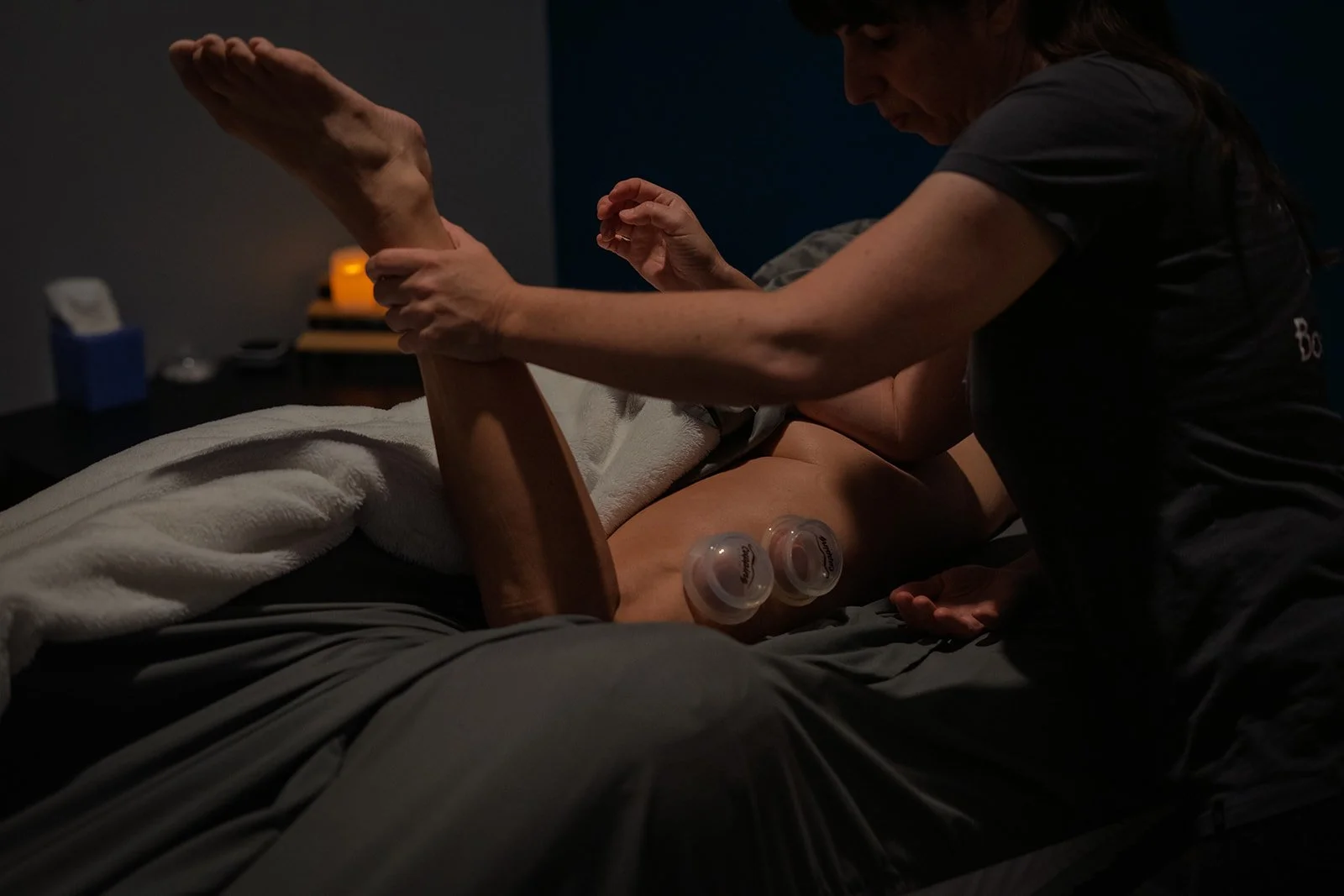
If you've been carrying a nagging lower back ache, chronic shoulder tightness, or the kind of bone-deep fatigue that a good night’s sleep just won’t fix, you’re in the right place. Let’s break down what cupping therapy actually is, how it transforms your body from the inside out, and why it’s becoming an essential part of the healing routine for active locals in Cedar City and Southern Utah.
What Is Cupping Therapy and Where Does It Come From?
While cupping might feel like a modern trend taking over social media, it is far from new.
Cupping is an ancient healing modality with roots tracing back thousands of years to ancient Egyptian, Middle Eastern, and Traditional Chinese Medicine (TCM). Early healers used hollowed-out animal horns, bamboo, and clay cups to draw impurities out of the body and restore the flow of vital energy (or Qi).
Fast forward to today: while the equipment has evolved to specialized medical-grade silicone, glass, or polycarbonate cups, the core philosophy remains the same.
The Key Difference: Pulling vs. Pushing
Most traditional forms of bodywork like standard Swedish massage or deep tissue work are compressive. They rely on direct pressure, pushing into muscles and fascia to break up knots and release tension.
Cupping flips the script. It is decompressive. Instead of pushing down on your tissue, cupping uses negative pressure (suction) to lift the skin, fascia, and top layers of muscle upward into the cup.
Think of it like creating breathing room for your internal tissues. By decompressing trapped layers, cupping allows blood, lymph, and oxygen to flow back into areas that have been restricted by injury, posture, or chronic stress.
What Cupping Does to Your Body (and Why You Want It)
Why would someone willingly sign up to have suction cups stuck to their back? Because the mechanical physiological response in your body delivers rapid, noticeable results.
Here is a breakdown of what happens beneath the surface during a session:
1. Fascial Release and Structural Mobility
Fascia is the connective tissue matrix wrapping around every muscle, bone, and organ in your body. When you're stressed, dehydrated, or recovering from repetitive strain, your fascia gets sticky and forms adhesions. This traps movement and causes that stiff, "locked-up" feeling. The negative pressure of cupping creates micro-space between the skin and fascia, unsticking those layers so your muscles can glide smoothly again.
2. Hyperemic Response (Explosive Blood Flow)
Suction draws a sudden influx of fresh, oxygen-rich blood directly to the target zone. This intense localized circulation bathes starved tissues in nutrient-packed blood, accelerating cell repair and flushing out stagnant metabolic waste products like lactic acid.
3. Nervous System Downregulation
Your body cannot heal when stuck in "fight or flight" mode. The gentle, steady pull of cupping stimulates cutaneous nerve endings, sending signals to your central nervous system to trigger the parasympathetic (rest and digest) response. It acts as an instant mechanical reset button for a stressed nervous system.
4. Lymphatic Drainage
Your lymphatic system is your body’s internal plumbing that removes cellular waste and fluid buildup. By creating localized suction, cupping stimulates sluggish lymphatic pathways, helping your body clear fluid retention and inflammation far more efficiently.
Who Benefits Most From Cupping Therapy?
At Body Revive, we see a wide variety of clients benefit from integrating cupping into their self-care and recovery routines.
Athletes and Fitness Enthusiasts: Whether you are prepping for a marathon, lifting heavy, or hiking the trails around Southern Utah, cupping speeds up recovery, reduces DOMS (delayed onset muscle soreness), and expands joint range of motion.
Desk Workers and Drivers: Hours spent slouched over computers or steering wheels create chronic tension along the upper back, neck, and chest. Cupping quickly decompresses tight chest muscles and opens up slouch-prone shoulders.
Individuals with Chronic Pain: If you deal with stubborn lower back tightness, sciatica symptoms, IT band syndrome, or shoulder impingements, cupping targets deep-seated tension that thumb or elbow pressure sometimes cannot reach.
Anyone Needing Stress Relief: The deep physical release creates a cascading mental effect, making it an ideal choice if you feel overwhelmed, overworked, or burned out.
Cupping works best when combined with broader bodywork. Pairing cupping with specialized massage treatments gives your body the double benefit of both compressive and decompressive therapy.
What to Expect During a Session at Body Revive
If you've never tried cupping before, stepping into the room with complete confidence makes all the difference. Here is how we handle your session step-by-step:
Step 1: Personalized Consultation
We don't do cookie-cutter treatments. We start by discussing your health history, daily activity levels, and current pain points. Whether it's tight traps from desk posture or hamstrings glued together from trail running, we map out a targeted plan.
Step 2: Choosing the Technique
Depending on your comfort level and goals, your therapist will use one (or a combination) of two primary methods:
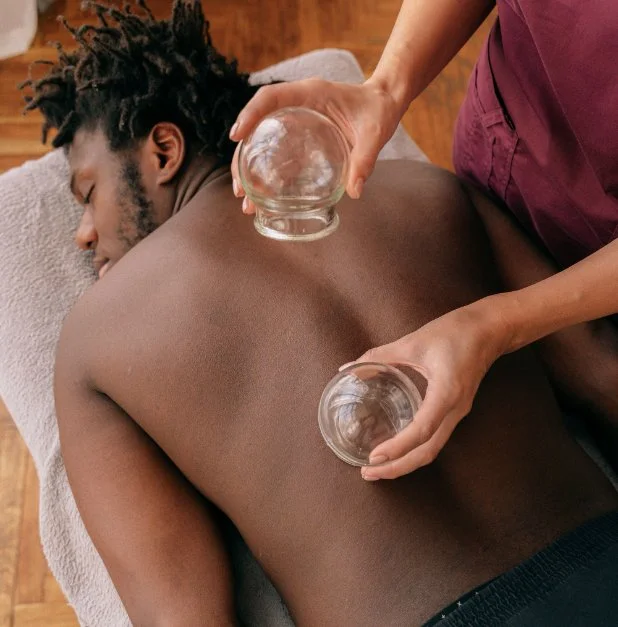
Stationary Cupping: Cups are applied to high-tension areas or trigger points and left in place for 3 to 10 minutes.
Dynamic (Moving) Cupping: A skin-safe oil or lotion is applied, and the therapist gently glides the suction cup along tissue lines. This feels like a deep, reverse massage and works wonders for clearing large areas like your back or thighs.
Step 3: Integrated Manual Therapy
At Body Revive, cupping isn't just a stand-alone trick; it’s an integrated tool. We frequently pair suction work alongside targeted medical, sports, and manual therapy to stretch, mobilize, and realign problem areas while the tissue is warm and hydrated.
Step 4: Aftercare and Understanding the "Marks"
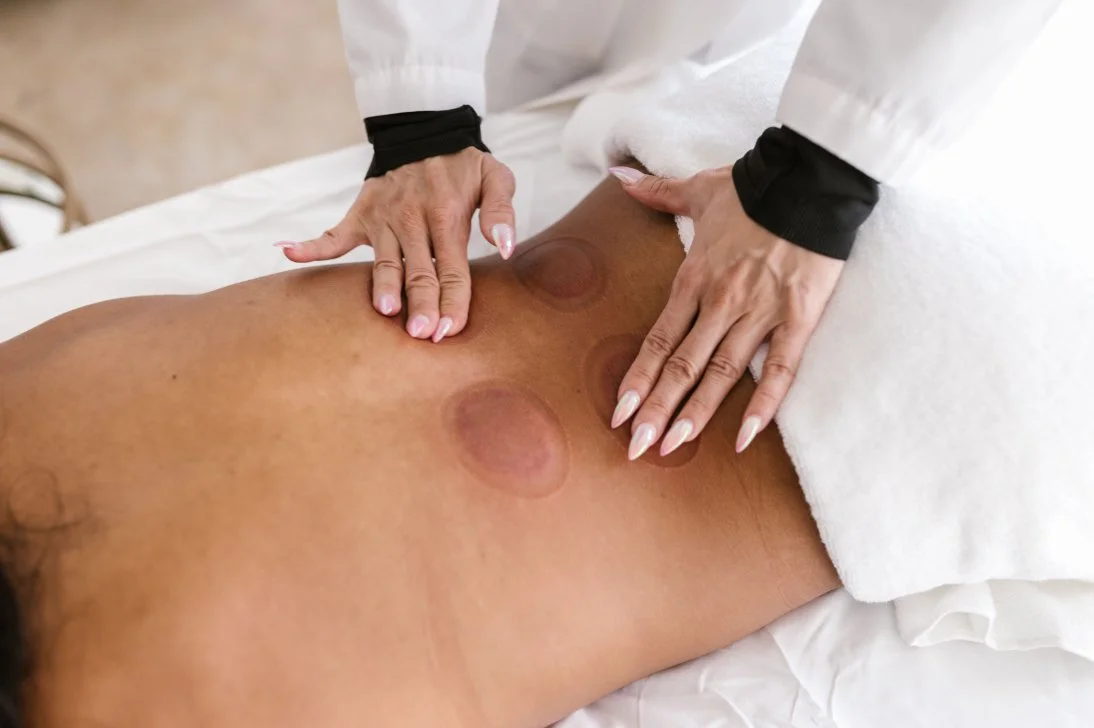
Let's address the elephant in the room: those marks are not bruises. A bruise is caused by broken blood vessels from blunt force trauma. Cupping marks are the result of cellular debris, old stagnant blood, and metabolic waste being drawn up from deep tissue into the superficial skin layer so your lymphatic system can sweep it away.
The color ranges from light pink to dark purple depending on the level of stagnation in the area. They are typically completely painless and fade within 3 to 10 days.
Frequently Asked Questions (FAQs) About Cupping
Does cupping therapy hurt?
No. Most clients describe the sensation as a tight, warm pulling or stretching feeling. It shouldn't feel sharp or painful. Your therapist will adjust the suction level to ensure you stay comfortable throughout the session.
How long do the circular marks last?
Depending on your circulation, hydration levels, and how much stagnation was present, marks usually last anywhere from 3 to 10 days. Hydrating well after your session speeds up the clearing process.
Is cupping safe for everyone?
Cupping is extremely safe for most people, but there are exceptions. We avoid cupping directly over open wounds, skin infections, active sunburns, or bone fractures. If you are pregnant or taking blood thinners, inform your therapist so we can adjust or modify the technique safely.
How often should I get cupping done?
For acute muscle tightness or injury recovery, scheduling sessions once every 1–2 weeks works best until symptoms improve. For ongoing wellness, maintenance, and stress management, 1–2 times a month keeps your fascia loose and healthy.
How does cupping differ from a standard Swedish massage?
While Swedish massage focuses primarily on light-to-medium pressure to promote general relaxation and surface circulation, cupping utilizes suction to pull tissue upward, addressing deep fascial restrictions and stubborn stagnation that standard relaxation massage won't release.
Leave Your Stress on the Table: Book Your Session Today
You don't have to carry chronic pain, tight shoulders, or sluggish muscle recovery around with you. Let us do the heavy lifting so you can leave your stress on the table and feel like a new you.
Whether you're an athlete looking to stay competitive or someone seeking a well-deserved reset, our medical-informed bodywork team is ready to support your healing journey.
Ready to see what decompressive relief feels like for yourself? Contact us today or click below to schedule your massage online.
“We’re more than a massage; we’re Body Revive.”
